Notice: Undefined offset: 3 in /home/host/raynar/www/html/_skin/layout/inc_navigation_middle.php on line 88
Eddy current
Eddy current testing (ECT) is a non-destructive testing (NDT) method used to detect surface and subsurface defects in conductive materials.
Here's an overview of how ECT works, its applications, advantages, and limitations.
How Eddy Current Testing Works
Principle
ECT is based on electromagnetic induction. When an alternating current (AC) passes through a coil, an alternating magnetic field is generated.
When this coil is placed near a conductive material, the alternating magnetic field induces circulating currents in the material, called eddy currents.
These eddy currents generate their own magnetic field which opposes the original magnetic field of the coil.
Detection
Defects or changes in the material, such as cracks or corrosion, disrupt the flow of eddy current.
These disturbances cause a change in the impedance of the coil which can be measured.
Impedance changes are interpreted to identify and characterize faults.
Applications
Aerospace: Crack and corrosion inspection of aircraft fuselages, wings and other components.
Power Generation: Inspection of heat exchanger tubes, steam generator tubes and other components for nuclear and fossil fuel power plants.
Automotive: Testing critical components such as engine parts and braking systems.
Manufacturing: Quality control of metal parts and welds.
Marine: Inspection of hulls and other critical marine structures.
Advantages
Non-destructive: Does not harm the test material.
Sensitivity: Can detect very small cracks and flaws.
Speed: Fast testing and instant results.
Versatility: Applicable to a wide range of conductive materials and structures.
Penetration Depth: Depending on the frequency of the AC used, it can detect flaws below the surface.
Restrictions
Conductive materials only: Limited to materials that can conduct electricity.
Surface Accessibility: The surface must be accessible to the probe or coil.
Complex interpretation: Accurate interpretation of results requires skilled workers.
Thickness: Penetration depth is limited, making it less effective on very thick materials.
Equipment usage
Probes and Coils: Various shapes and sizes to suit different testing requirements.
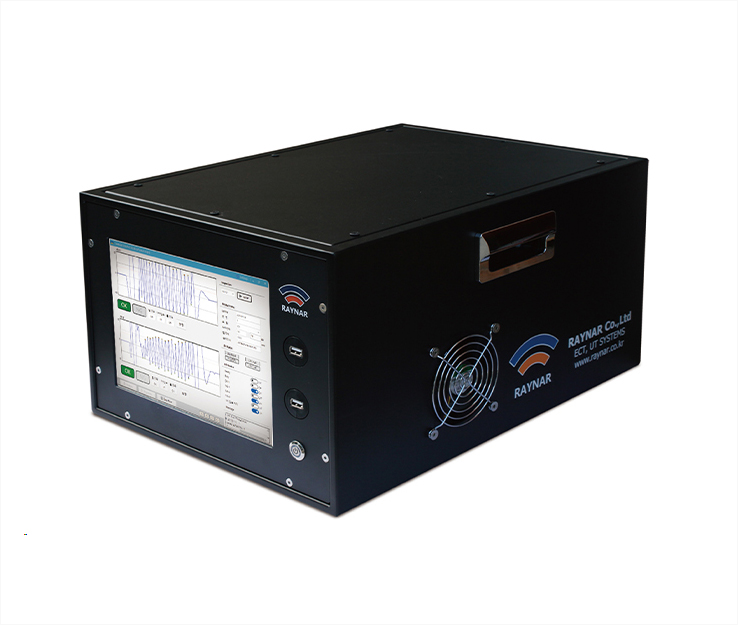
Instrumentation: A device that generates and measures an AC signal with a display device to visualize the impedance changes.
Reference Standard: A sample of known defects used to calibrate and verify a test setup.
Procedure
Settings
Clean the surface to remove dust, oil, or other contaminants.
Select the appropriate probe and frequency depending on the material and expected defect type.
Calibrations
Calibrate your equipment using reference standards.
Adjust sensitivity and other settings to optimize detection capabilities.
Test
Scan the probe over the test surface.
The display monitors impedance changes that indicate a fault.
Analysis
Interpret data to find and characterize defects.
Reports results often including recommendations for further testing or repair.
Eddy current testing is a powerful and efficient method to ensure the integrity of conductive materials and components in a variety of industries. The ability to detect small sub-surface defects is an invaluable tool for maintaining safety and quality standards.